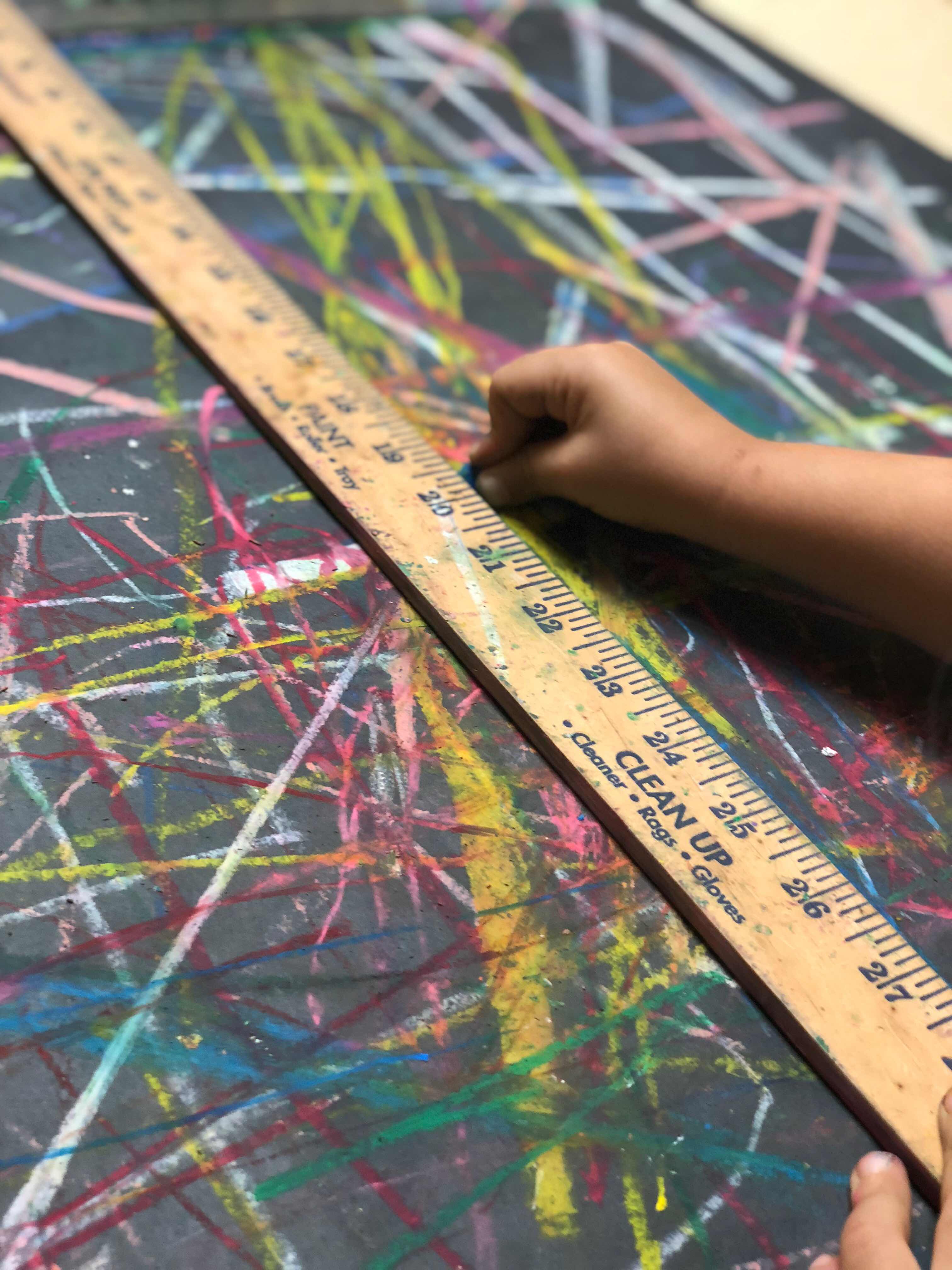
the planting of the seeds... the painting of the petals... the stems came next... the gluing of the seeds... we cut out the petals... measured our friends... we glued our flowers together... our garden grew...
We often use loose material compositions in our classroom as a way for children to tell us what they know. We set out various materials, stones, gems, paper and sticks. These representations are not permanent. We take a picture and then the material gets sorted back and the activity is ready for the next child.
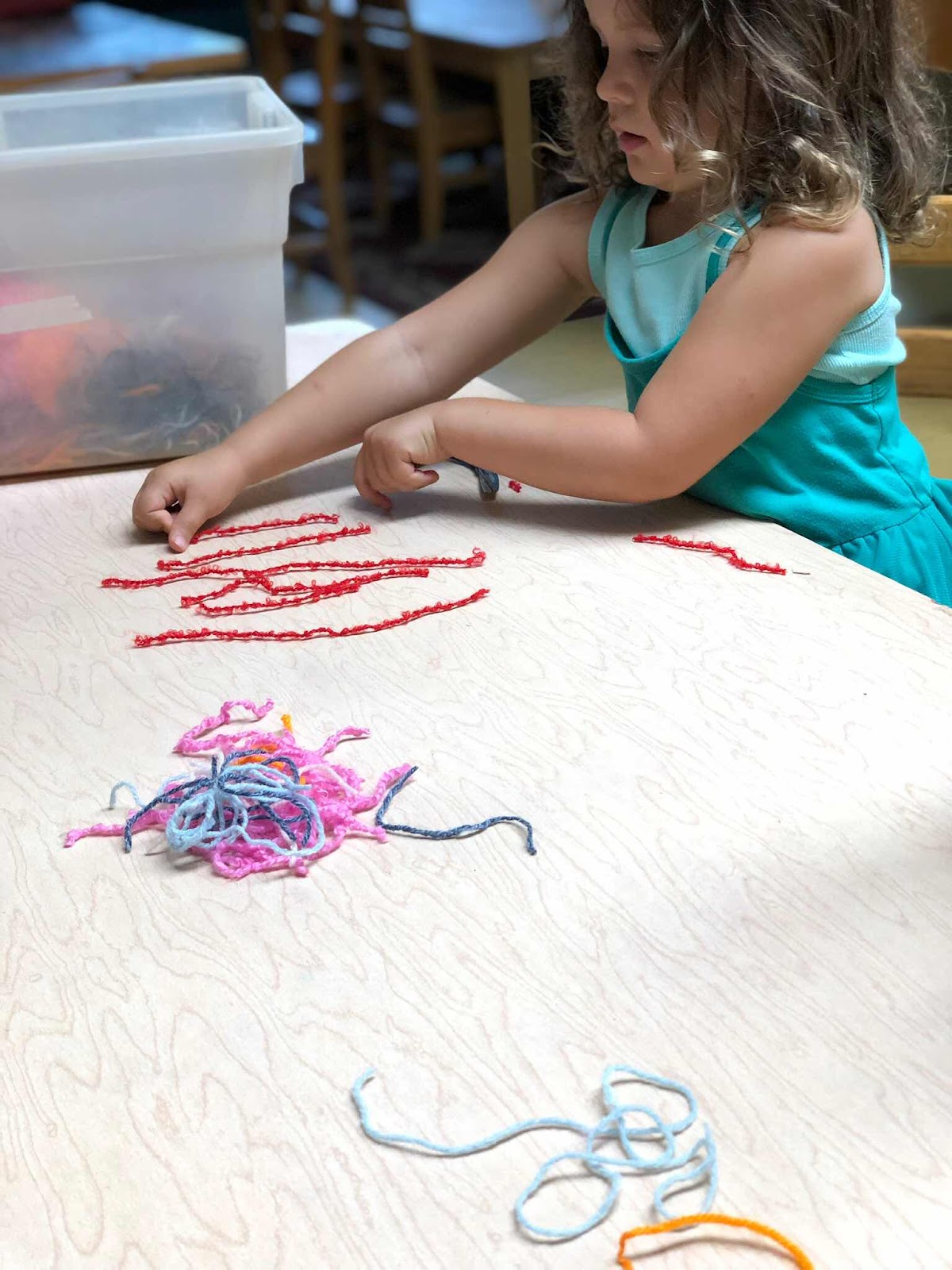
This project was inspired by the book “Lines that squiggle” by Candace Whitman . If the straight line is the first step to understanding form, the next step would be lines that bend and curve. Yarn can provoke this understanding in a fun and very engaging way. It can start out straight and be manipulated to create so many different kinds of lines. The children honed their cutting skills to produce yarn lines of different sizes. When we had a big pile of colorful, squiggly lines we used tongs or fingers to dip pieces of yarn into glue. The yarn was then placed on poster board. It was a great way to segue from the straight line to lines that squiggle and curve. Using clay the children used clay to create their own lines. Exploring lines has led us to the circle. One of our friends pointed out that a circle is a line that curves. We also realized that when two ends of a curved line meet it makes a circle. Lines that are straight that connect...
We learned there are different types of clouds, and that not all clouds bring rain. We can tell the weather by the kinds of clouds that are in the sky. Storm clouds are called cumulonimbus. They are tall, puffy and grey. They bring the rain. We invited the children to paint storm clouds. They turned out beautiful! Look for the them in our work room to the left of our back door.
Comments
Post a Comment